
Aviator Auto Cash-Out Explained Explained
Aviator auto cash-out closes a bet when the round reaches a multiplier chosen by the player. Set 1.5x, and the bet should cash out at 1.50x if the round reaches that point first.
The setting matters because Aviator can crash at any moment. A player does not need to watch the curve and press the cash-out button at exactly the right time. The field sends the selected target with the bet, while the game still uses the same round result and the same 3% house edge.
Auto Cash-Out Field
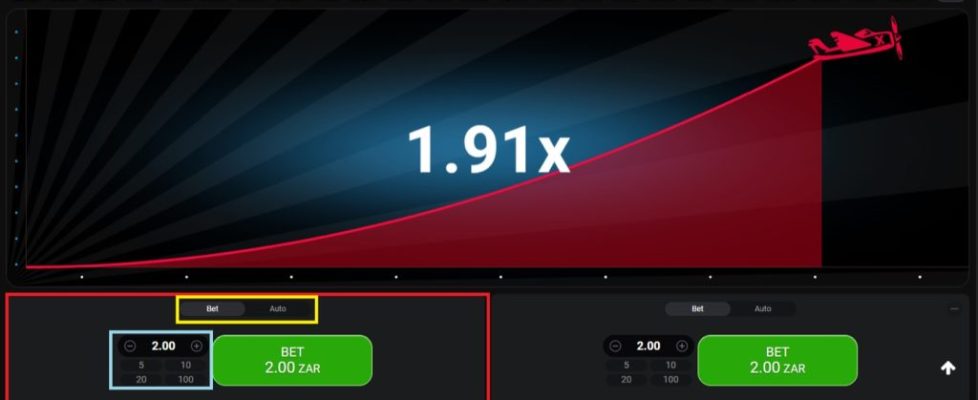
Aviator has a Bet tab and an Auto tab in each bet panel. The Auto Cash-Out field accepts a preset multiplier such as 1.5x or 2x.
The multiplier is the target for that bet. It is not a prediction of the crash point. It is an instruction to cash out if the increasing curve reaches the selected number before the crash.
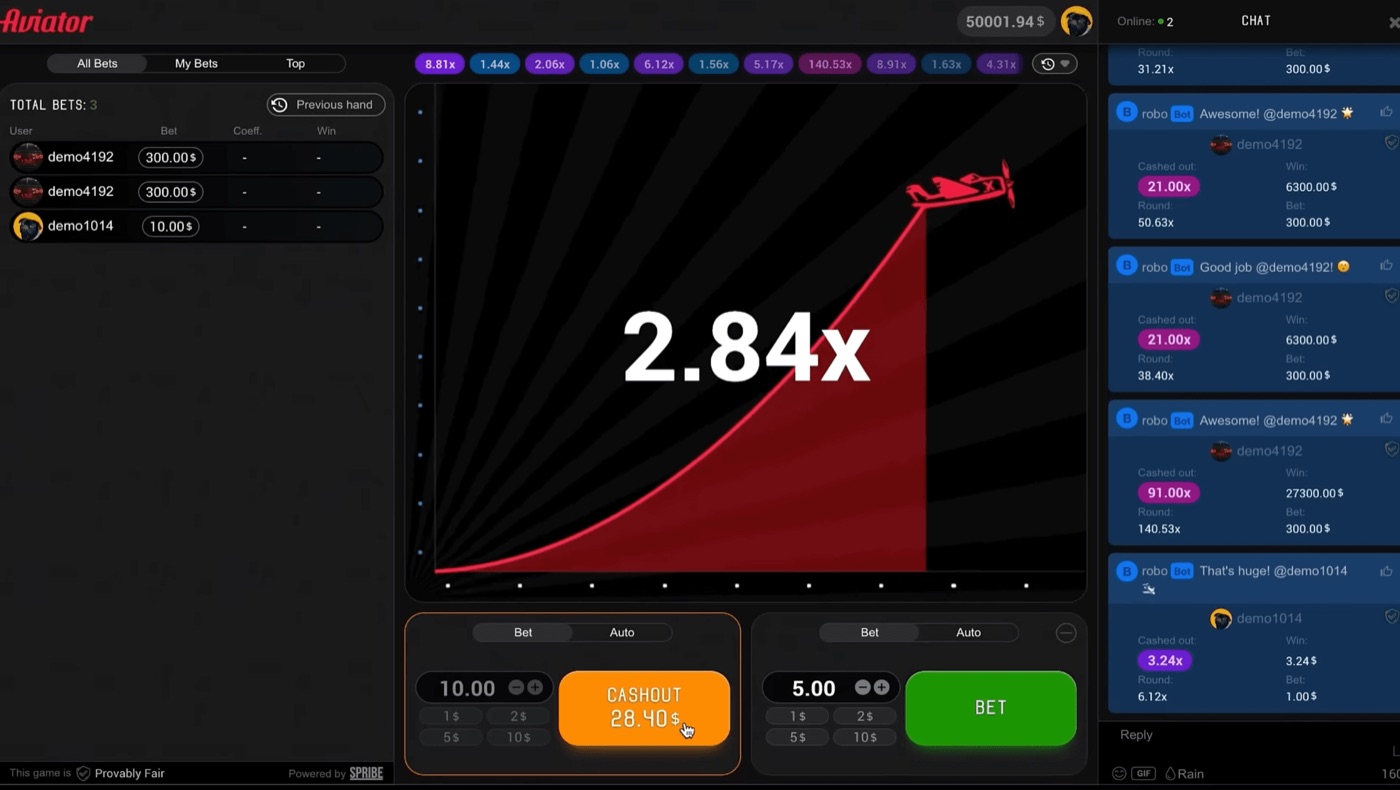
Aviator shows live bets, chat and a cash-out at 28.40x.
For example, a player can enter a stake and select 1.5x in the Auto Cash-Out field. If the round reaches 1.50x, the bet cashes out automatically. If the round crashes at 1.20x, the bet loses before the target is reached.
- Choose the bet panel.
- Open the Auto tab.
- Enter the stake.
- Enter the target multiplier.
- Place the bet before the next round starts.
Aviator has two bet panels per round. Each panel can use its own cash-out setting, so one bet can target 1.5x while another targets 2x or a higher multiplier.
The field does not change the crash point. Spribe describes Aviator as a crash game with an increasing curve that can crash anytime. The crash point is fixed before take-off, and the auto setting only determines when the selected bet attempts to close.
Preset Multiplier Choices
A 1.5x target wins when a round reaches 1.5x, while a 2x target wins only when the round reaches 2x. The probability figures supplied for Aviator are 64.7% at 1.5x and 48.5% at 2x.
These figures come from the probability formula 0.97 divided by the target multiplier. A lower target is reached more often than a higher target, but every target carries the same expected value of minus 3% of the stake.
| Auto cash-out target | Probability the round reaches it | What must happen |
|---|---|---|
| 1.2x | 80.8% | The curve reaches 1.20x first |
| 1.5x | 64.7% | The curve reaches 1.50x first |
| 2x | 48.5% | The curve reaches 2.00x first |
| 3x | 32.3% | The curve reaches 3.00x first |
| 5x | 19.4% | The curve reaches 5.00x first |
The table describes the chance that the round reaches a target. It does not promise that a particular sequence will match the percentage. Rounds are independent, so a run of low multipliers does not make a higher multiplier due.
- 1.2x gives the highest listed probability in the table.
- 1.5x sits below 1.2x but above 2x.
- 2x requires the round to continue twice as far as 1x.
- 5x is reached less often than 1.5x or 2x.
About 3% of rounds crash instantly at 1.00x. That is roughly 1 round in 33. An auto cash-out setting cannot prevent a loss when the round ends before the selected target.
1.5x And 2x Examples
A 1.5x auto cash-out on a $10 stake returns $15 when the round reaches 1.50x. A 2x auto cash-out on a $10 stake returns $20 when the round reaches 2.00x.
The return includes the original stake in these examples. The result at 1.5x is a $5 profit before considering other bets, while the result at 2x is a $10 profit. A failed target loses the $10 stake.
- Place a $10 bet with a 1.5x target.
- If the curve reaches 1.50x, the system closes the bet at that target.
- The return is $15.
- If the crash occurs below 1.50x, the return is $0.
The same process applies to 2x. A $10 stake with a 2x target returns $20 when the round reaches 2.00x. Its listed probability is 48.5%, compared with 64.7% for a 1.5x target.
- Place a $10 bet with a 2x target.
- If the curve reaches 2.00x, the system closes the bet at that target.
- The return is $20.
- If the crash occurs below 2.00x, the return is $0.
The larger return at 2x does not mean a better mathematical edge. Aviator has an RTP of 97% and a house edge of 3%. The expected value is minus 3% of the stake at every cash-out target.
For a $10 stake, that expected value is minus $0.30 at both 1.5x and 2x over many rounds. The choice changes the balance between hit frequency and payout size. It does not remove the house edge.
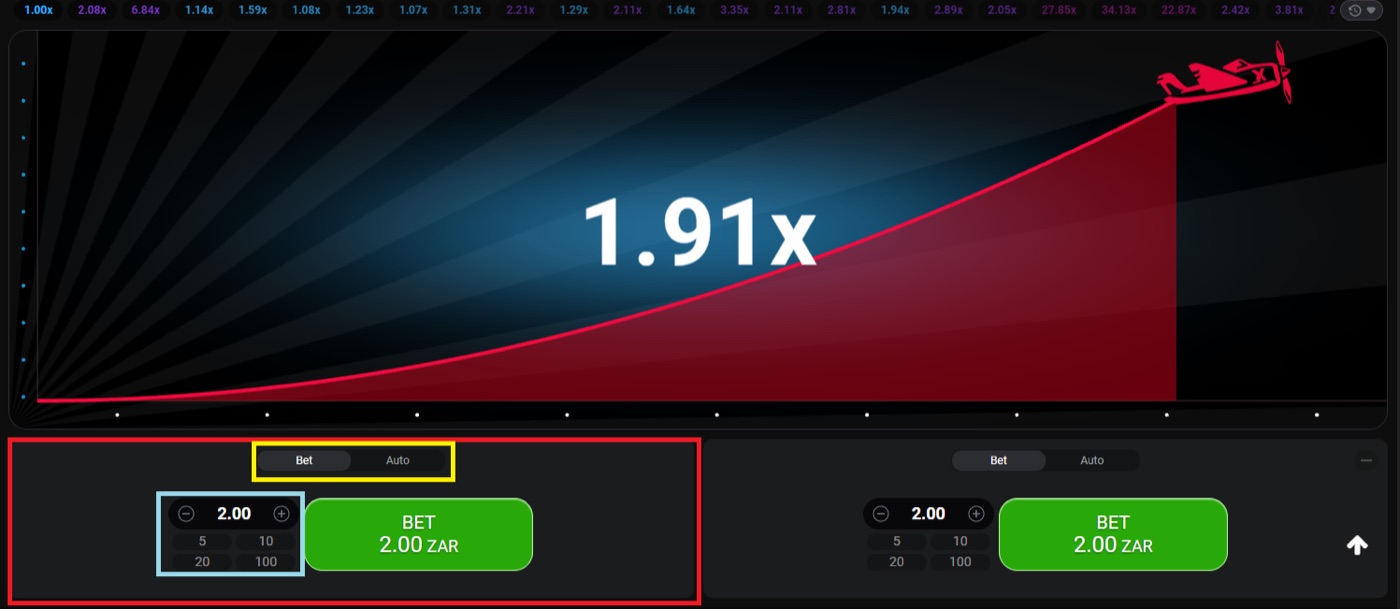
An Aviator desktop round displays 1.91x with two bet panels.
Why Timing Becomes Automatic
A manual cash-out requires the player to press the button before the crash. An auto cash-out at 1.5x sends the instruction in advance, so the player does not need to react at 1.50x.
This removes one manual action. It does not remove latency from the game or guarantee a target. The cash-out request must reach the server before the crash, and time-outs can come from latency or a slow device.
Consider a round moving through 1.40x, 1.47x and 1.50x. With manual timing, the player must press during that movement. With a 1.5x auto setting, the system handles the selected action when the target is reached.
Auto cash-out is therefore a timing tool, not a prediction tool. It cannot identify a safe round, read a pattern or alter the result fixed before take-off.
- Manual cash-out depends on a player action.
- Auto cash-out stores the selected target before the round.
- Both methods depend on the crash occurring after the target.
- Neither method changes the 97% RTP.
Players sometimes describe a failed manual cash-out as a different result or a rigged round. Aviator uses a provably fair system: the server publishes a SHA-256 hash of the server seed before the round, combines client seeds, and reveals the inputs after the round for checking in the game.
Neither the operator nor Spribe can change the result after the round starts. The practical difference is that auto cash-out avoids relying on a last-second manual click when the selected multiplier is reached.
For a crash game, the choice between manual and automatic cash-out is about execution. The multiplier, stake, crash point and connection still determine the result. A player looking for aviator online should treat the auto cash-out field as a multiplier and cash-out setting, not as a way to predict the next crash.
Two Bet Panels
Aviator provides two bet panels in each round. The panels can use separate cash-out settings, which allows one stake to target 1.5x while another targets 2x.
A split example uses $5 on a 1.5x auto cash-out and $5 on a 2x auto cash-out. If the round reaches 2x, both targets have been reached; if it stops at 1.7x, only the 1.5x bet has reached its target.
The two-panel layout does not create a new mathematical advantage. It divides the total stake between separate instructions. The combined expected value remains minus 3% of the total stake.
- Panel one can use a $5 stake and a 1.5x target.
- Panel two can use a $5 stake and a 2x target.
- A round ending below 1.5x loses both bets.
- A round ending between 1.5x and 2x reaches only the first target.
- A round reaching 2x reaches both targets.
The interface also includes Auto Bet or Auto Play settings for 10 to 100 rounds, with stop-on-win and stop-on-loss options. Those controls repeat the chosen bet instructions; they do not improve the probability of reaching 1.5x or 2x.
Players can review previous multipliers in the round history. That history describes earlier rounds only. It cannot change the probability of the next round, because Aviator rounds are independent.
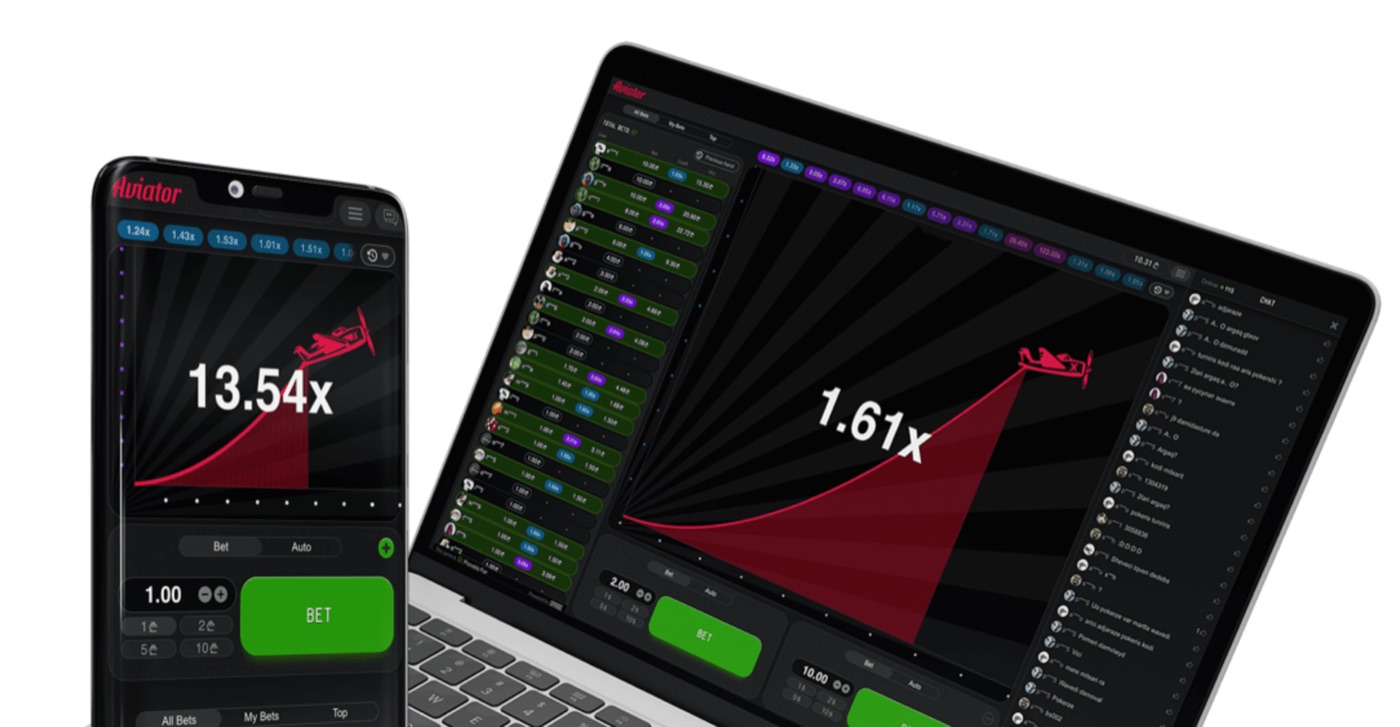
Aviator appears on a phone and laptop at 13.54x and 1.61x.
Setting A Target Carefully
A 1.5x setting has a listed reach probability of 64.7%. A 2x setting has a listed reach probability of 48.5%.
Those numbers can help explain the trade-off, but they cannot predict a short session. The game is high variance, and each round can end at 1.00x or continue to a much higher multiplier.
A player can test the field in demo mode without registration. Demo mode is available through an operator demo or demo.spribe.io, and Aviator works in desktop, tablet and mobile browsers.
- Enter the target before placing the bet.
- Check whether the correct bet panel is selected.
- Confirm the stake and multiplier separately.
- Use demo mode to understand the control.
- Set a loss limit before using real money.
Typical stakes range from about $0.10 to $100 per bet, but the available range depends on the operator. Win caps per round also depend on the operator, while Spribe does not publish a maximum multiplier.
Do not increase a stake after a loss to recover it. Martingale doubles the stake after each loss and reaches 1,024 times the base stake after 10 losses. Fibonacci and D’Alembert systems also do not beat Aviator’s 3% house edge.
Play only with money you can afford to lose, and stop when the loss limit is reached. Auto cash-out controls timing, not risk.
Aviator FAQ
Aviator auto cash-out uses a preset multiplier such as 1.5x or 2x. The setting can automate the cash-out action, but it cannot change the crash point or the house edge.
Spribe’s probability formula is 0.97 divided by the selected multiplier. At 1.5x the listed probability is 64.7%, and at 2x it is 48.5%.
Does 1.5x always win?
No. The round must reach 1.50x before it crashes. About 3% of rounds crash instantly at 1.00x, and other rounds can stop below the selected target.
Does auto cash-out change RTP?
No. Aviator has 97% RTP and a 3% house edge. The expected value is minus 3% of the stake at every cash-out target, including 1.5x and 2x.
Can auto cash-out predict the crash?
No. The crash point is fixed before take-off through the provably fair process. Auto cash-out only applies the target selected by the player.
Why can a cash-out time out?
A cash-out request must reach the server before the crash. Latency or a slow device can cause a time-out, so manual timing remains exposed to connection delays.
Can two bets use different targets?
Yes. Aviator has two bet panels per round with separate cash-outs. One panel can use 1.5x while the other uses 2x, subject to the settings available through the operator.