
Free vs Paid OnlyFans Tiers: Cost Per Visit Explained
OnlyFans pricing looks simple at first glance, but the number attached to a page tells you very little about what a month of actual use will cost. A free page can quietly become the most expensive habit in a browser tab, while a modest paid subscription can end up cheaper per visit than almost anything else you follow. This article compares free and paid tiers using a single measure: cost per visit.

Cost per visit works because it links money to behaviour. A subscription is paid once, but the value arrives visit by visit. If a page costs $4.99 and you open it twenty times in a month, the cost per visit is roughly twenty-five cents.
Before the numbers, a note on how the platform is built. OnlyFans has no built-in discovery feed or directory, which is why ranking sites exist and why readers rely on curated lists to find pages at all. That absence shapes spending too: without a feed pushing new accounts at you, the pages you already follow get most of your attention and most of your money.
Why cost per visit beats sticker price
A sticker price is a claim. Cost per visit is a measurement. The first is set by the creator, the second is set by your own habits, and only one of those is under your control.
| Signal | Good example | Poor example |
|---|---|---|
| Subscription price | $4.99 flat, known in advance | $0 entry, spending decided per message |
| Unlock frequency | One paid message every few weeks | Several paid messages per visit |
| Visit frequency | Opened twice a week | Opened daily with tipping |
| Month-end total | Predictable, matches the plan | Varies, often higher than expected |
Paid tiers sit in a narrow band. The minimum subscription is $4.99 and the maximum is $49.99, with typical paid pages landing between $4.99 and $15, and averages around $5 to $10. There is no base price below $4.99; only promotional first months may dip under it.
Free means the price is set to $0 and the creator earns through pay-per-view messages and tips. There is no ceiling on that model. A page can cost nothing for three months and then cost $40 in a week if you unlock heavily.
Tip: check your message and tip history before you judge a page. Most people underestimate their unlock spending by a wide margin, and the history screen is the only honest record you have.
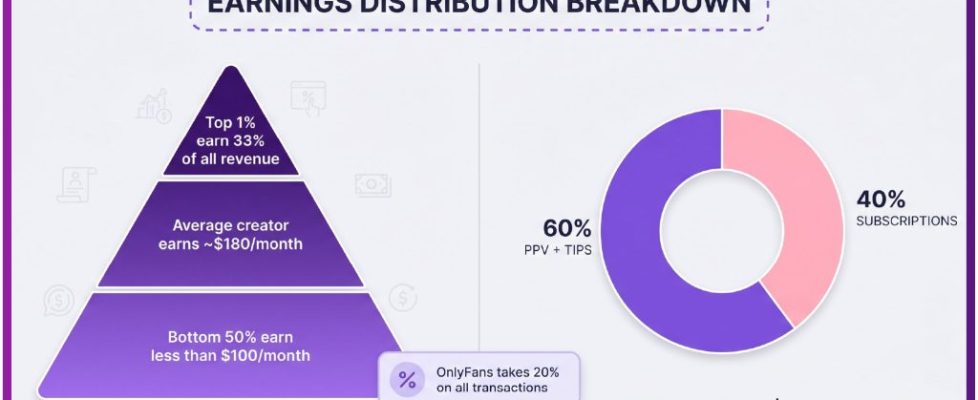
One platform rule matters here. The platform fee is 20% on everything, whether subscriptions, tips, or pay-per-view, so the creator keeps 80%. That does not change your cost per visit, but it explains why free pages push unlocks and tips: the subscription was never going to be the revenue.

Estimating visits per month honestly
Most cost-per-visit estimates fail at this step, not at the arithmetic. People count the visits they remember, which are the interesting ones, and forget the quick checks. A visit is any time you open the page, including the thirty-second scroll before bed.
Count the days you opened the page in the last full month, not a typical week. Include short visits that lasted under a minute. Add visits made from a second device or a logged-in browser.
Rounding down is deliberate. It keeps the estimate conservative and prevents the cost per visit figure from looking artificially low. If you are unsure between twelve and twenty visits, use twelve.
Two habits distort the count more than anything else. The first is binge months, where a quiet page suddenly becomes a daily stop. The second is dormant months, where a paid subscription renews without a single visit. Both belong in the average over time, which is why this measure should be recalculated rather than fixed once.

Estimating spend per page type
Spend is easier to state than visits because the platform records it. Pull the monthly total for each page and separate subscriptions from everything else. Free pages will show zero in the subscription column and a variable figure in the tips and unlocks column.
| Input | Free page | Low-cost page | Paid page |
|---|---|---|---|
| Monthly subscription | $0 | $4.99 | $10 to $15 |
| Monthly unlocks and tips | $10 to $40 | $5 to $15 | $0 to $10 |
| Visits per month | 10 to 20 | 8 to 15 | 15 to 25 |
Notice that the free column has the widest range on the variable row and the narrowest on the fixed row. That asymmetry is the entire difference between the two tiers. A paid page trades flexibility for predictability; a free page does the reverse, and the trade only pays off when your unlock spending stays low on its own.

Doing the division
The formula is one line: monthly spend divided by visits equals cost per visit. A paid page at $10 with twenty visits lands at fifty cents per visit. A free page with $25 in unlocks across twelve visits lands at just over two dollars per visit. For a starting point, top 30 onlyfans earnings collects free pages.
- Open your payment or spending history and set it to the last full calendar month.
- Total all charges for one page, including subscriptions, tips, and pay-per-view unlocks.
- Write down the visit count from your diary or browser history for the same month.
- Divide total spend by visits and record the result to the nearest cent.
- Repeat for every page you follow before comparing any two of them.
The inputs do not move the result equally. Visit count swings the figure hardest because it is the denominator and because people estimate it badly. Unlock spending is the second most influential input and the one that grows without a notification.
For readers who want context on how large the top end of the platform has become, this breakdown of top 30 onlyfans earnings is useful background, though it describes the extreme edge rather than the typical page you follow. BestOnlyFans and similar ranking sites exist precisely because the platform offers no directory of its own.

Reading the result without overreacting
A single month is a sample, not a verdict. One heavy month of unlocks makes a free page look expensive; one quiet month makes it look cheap. The measure is only useful when it covers at least three months and preferably a full quarter.
Seasonality is real. Holidays, travel, and workload all change how often a page gets opened. A page you visited daily in January may sit untouched through a busy March, which pushes cost per visit up even though nothing about the page changed.
- Subscriptions renew on the same date each month unless cancelled.
- Tips are voluntary and vary widely with no warning.
- Pay-per-view unlocks cluster around new posts rather than spreading evenly.
- Promotional first months expire and the price returns to normal.
Warning: when a creator raises the subscription price, auto-renew stops. Existing access lasts until the current paid period ends, so a renewal you expected may simply not arrive. Check the page status rather than assuming.

When free pages win on this measure
Free pages are not a worse deal by default. They win clearly in specific situations where unlock spending stays naturally low. The pattern is light, occasional use with no pressure to buy anything.
- You follow many pages and rotate between them rather than committing to one.
- Your unlock spending stays under $5 in a typical month.
- You visit fewer than ten times monthly and never feel the urge to tip.
- You want to test whether a page holds your interest before paying anything.
The mistakes to avoid on free pages are consistent. Do not count a visit as free just because no charge appeared that day; the charge arrived earlier as an unlock and still belongs in the total. Do not compare one free page against one paid page and generalise. Do not ignore tips, because they are the part of the spend that grows fastest and gets forgotten first.
When paid pages win on this measure
Paid pages win whenever use is steady and unlock spending is not. A flat $4.99 or $10 subscription divided by twenty visits produces a low, stable figure that does not swing with mood. That stability is the product you are buying, and for daily visitors it usually beats the alternative.
- You open the page most days and rarely use pay-per-view.
- You prefer a known monthly cost over a variable one.
- You have cancelled subscriptions before and want the renewal date visible.
- Your unlock spending on free pages has exceeded a subscription price.
BestOnlyFans style directories can help you compare subscription prices across pages, but they cannot estimate your visits. That part stays with you. The honest position is that paid tiers suit regular habits, and free tiers suit occasional ones, and neither is universally cheaper.
Keeping the comparison alive
Prices change, habits change, and promotional periods end. A cost per visit figure from six months ago is a historical document, not a current one. The fix is a short quarterly review that takes a few minutes and prevents the slow drift where a page stays subscribed long after you stopped visiting it.
- Recalculate cost per visit for every page you follow.
- Cancel anything that renewed without a single visit in the quarter.
- Recheck subscription prices, since a rise will have stopped auto-renew.
- Compare the new figures and drop the two worst performers.
- Note which free pages have started costing more than a paid alternative.
That last check is the one people skip. A free page does not announce that it became expensive; the change happens inside your own spending. BestOnlyFans and other ranking sites can tell you what a page charges, but only your own arithmetic can tell you what it costs you.
FAQ
Is there any OnlyFans subscription below $4.99?
No. The minimum base price is $4.99, and only promotional first months may dip below that figure.
How much do free pages actually cost?
Nothing to follow, but unlocks and tips are charged per item, so monthly totals vary and are set by your own spending.
What does the platform take from each payment?
A 20% fee applies to subscriptions, tips, and pay-per-view, and the creator keeps the remaining 80%.
What happens if a subscription price rises?
Auto-renew stops. Access continues until the current paid period ends, after which you would need to resubscribe.